Mining Automation
Дэлгэрэнгүй тайлбарDetailed information詳細情報Informations détailléesDetaillierte Informationen
Integrated Management
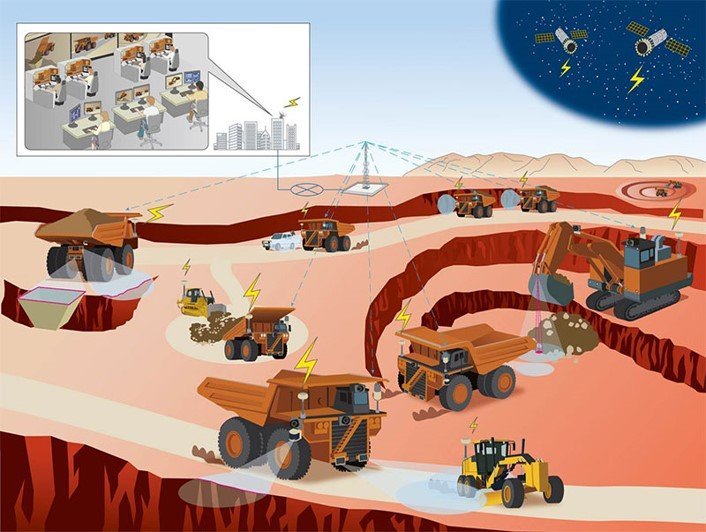
MineLink FMS is a management system with more than 10 years of successful use in developing, implementing, supporting, and maintaining mining fleet management for SNC Technologies. MineLink FMS aims to improve mine productivity and efficiency while reducing maintenance and support costs. It can be used by mines of any size to establish management and operational oversight.
MineLink FMS synchronizes current data to reduce bandwidth use between equipment and servers, connecting mobile equipment and technologies for more efficient operation. To reduce dependence on server connectivity, critical decisions—such as operational and status changes and operator logins—are stored in real time on high-performance computers installed on each piece of heavy equipment, ensuring reliable operation.
System Architecture

Mine Management Systems
Mine Management Systems
- Mine management
- Production monitoring
Mining Equipment Monitoring
- Mining equipment monitoring
Tire Pressure Monitoring
- Loader tire failure monitoring
- Production monitoring
Fuel Monitoring
- Fuel monitoring
- Fuel management
Engine Monitoring
- Engine monitoring
- Engine management
Geological Block and Structure Modeling
- Soil-layer database
- Material location classification

Safety
Driver Safety Monitoring
- Driver fatigue monitoring system
- Driver fatigue alerts
- Fatigue reporting
Collision Avoidance System
- Radar sensing and monitoring
- Image and video monitoring
Speed Limit Monitoring
- Speed limit monitoring
- Video and photo documentation
Intelligent Traffic Monitoring and Control
- Mine road management
- Idle-time monitoring
Cab Access Control
- Driver monitoring and camera
- RFID access system

Communications
Satellite Communications
- Satellite networks for remote mines
- DirectIP, C-Band, Ku-Band, and Ka-Band connectivity
Internet Connectivity
- Fiber-optic and Wi-Fi connectivity
- Connectivity for harsh environments
Internal Networks
- High-security connectivity
- Connecting remote areas to the central site
- Centralized enterprise connectivity
Mobile Network Systems
- Mine fleet connectivity
- Portable stations
Mine Management System
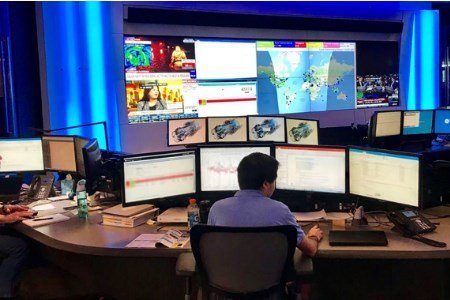
The core of the MineLink fleet-management system is the dispatch control center, which enables mine dispatchers and supervisors to monitor all on-site equipment in real time. The dispatch screen displays alerts for irregular conditions—such as late arrivals or vehicles following incorrect routes—so immediate action can be taken. The control center can also directly manage exceptional situations, such as assigning a truck to a maintenance area.
Collision Avoidance System
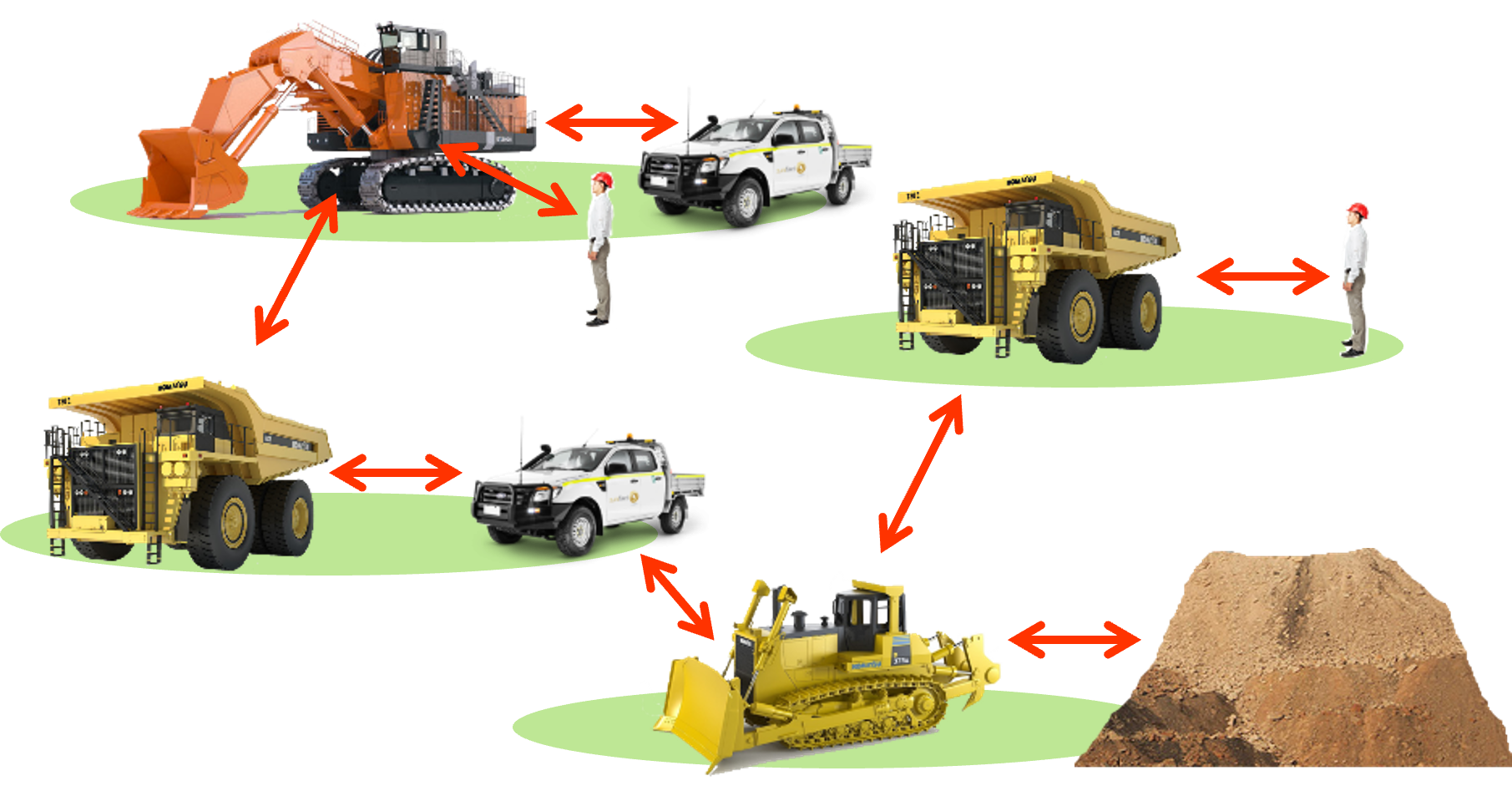
The growing number, size, and power of vehicles and equipment in open-pit and underground mines have created many operational benefits. However, they have also greatly increased risks such as poor visibility, accidental vehicle collisions, and pedestrian fatalities. A collision-avoidance system provides the following benefits.
Benefits:
- Improves mine safety and helps prevent loss of life.
- Helps prevent vehicle damage.
- Enhances safety in hazardous environmental conditions.
- Enables data from multiple sensors to be viewed on one screen.
- Can integrate with other safety devices and systems.
- Evidence shows that users who implement occupational-health and safety systems can prevent 75% of incidents caused by blind spots and speeding.
24/7 Alert Monitoring
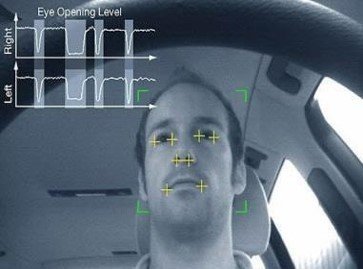
Operator fatigue while driving has long been an unavoidable operational challenge. The risk of an accident is high when an operator drives for more than six hours a day or does not take adequate rest.
MineSafeDrive – Driver Monitoring System
MineSafeDrive helps prevent accidents caused by operator fatigue and drowsiness. It activates when the operator becomes tired or distracted. When it detects excessive fatigue, drowsiness, or distractions—for example, using a phone, smoking, or looking in one direction for too long—it alerts the operator and sends the information back to the central monitoring station. Connectivity is available through GSM/GPRS, WiFi, SAT, and other network options.

Уулзалтын цаг товлох
Unmanaged devices present a weak point in security. Prevent corporate data from mixing with other data and software on the device.